
Core Leadership Traits
Six Core Traits of World Business Leaders
Recommended Books and Core Ideas
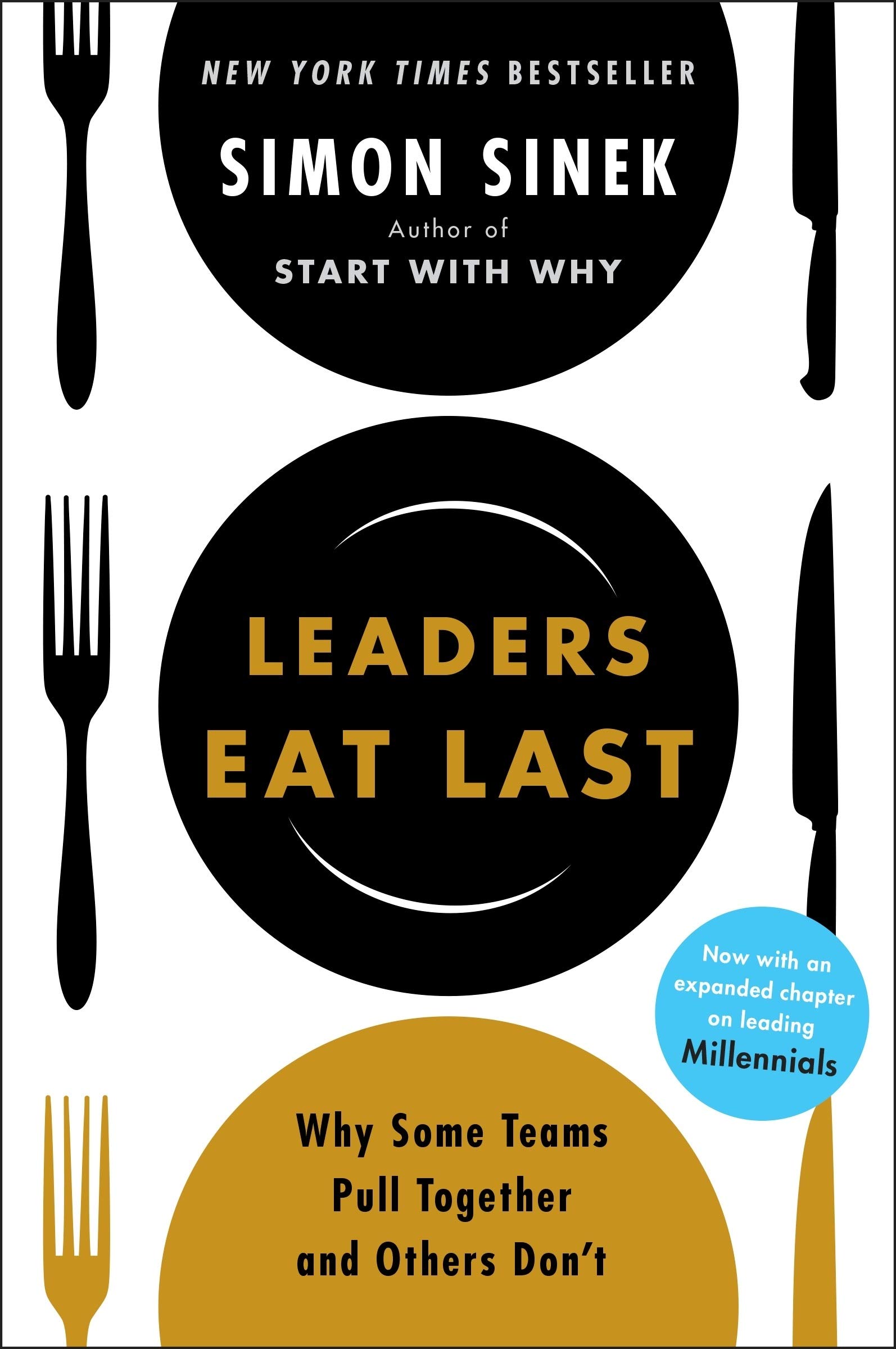
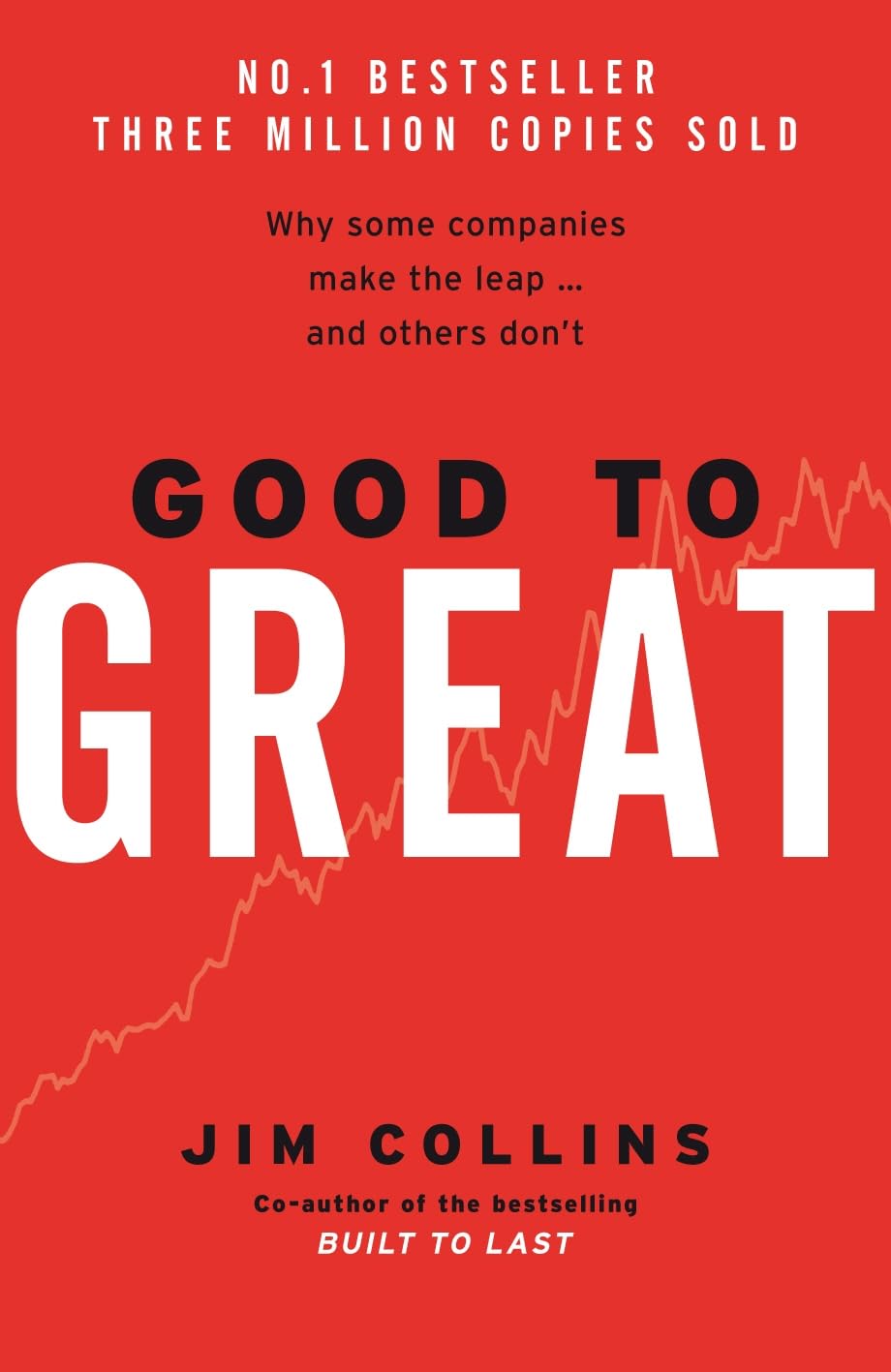


“Pain plus reflection equals progress.”


“The greatest victory is that which requires no battle.”
Conclusion

-
Continuously Building Knowledge.
-
Advanced Engineering Training Simulations for Interactive, Immersive Learning.
-
Built by Trusted Experts.
Madelyn Kinch
Education and Content Development Manager
Madelyn Kinch is a Business Analyst at Stacked Learning, bringing over seven years of experience in leading the development of award-winning interactive digital products. With a diverse background spanning education, content development, accessible content writing, and digital delivery, Madelyn is passionate about making service access more equitable through the creation of intuitive, accessible, and user-friendly digital solutions. Her expertise extends across sectors such as government, health, and not-for-profit service delivery. Madelyn has a strong interest in accessible design, emerging technologies, and AI, particularly in how these innovations can serve as assistive technology to enhance service accessibility and inclusivity for diverse communities.
Jeff Wilson
Digital Content Manager
Jeff Wilson is the Digital Content Manager at Stacked Learning, where he brings a wealth of experience as a customer-focused IT professional. With expertise in technical, sales, and management domains, Jeff is driven by a passion for making the internet a safer place while delivering exceptional products and services. He is dedicated to achieving quality outcomes in a timely manner, ensuring that both his projects and communications are clear, concise, and effectively understood by all stakeholders. Jeff’s leadership capabilities have been honed through his experience running his own business, where he successfully led teams and provided valuable support to both staff and clients. His approach to project management is grounded in the Getting Things Done (GTD) methodology, which allows him to maintain focus and drive efficient outcomes under pressure. Through his proven leadership and strategic communication, Jeff consistently promotes professional growth and fosters positive, productive environments.
Natalee Nahoom
Director of Corporate Services & Financial Controller
After finishing her degree in Accounting & Finance, Natalee worked with Samsung Communications as a Junior Accountant and was promoted to Company Financial Controller after just 2 years. She worked in the Telco Industry for over 15 years before moving to a multi-national Agricultural company to Head up the Finance department for an Australian subsidiary. She has vast experience in the implementation of business plans, financial modelling growth and profitability strategies as well as the delivery of detailed financial accounting reports and compliance to the Australian accounting standards. Natalee is a dedicated and detail-oriented accounting professional, committed to helping AJSS achieve future business growth actively helping the Management team become more effective and efficient in their business practices and control measures.
Bryan Edwards
Global Instructor
Bryan Edwards is a licensed Professional Engineer in California, USA. He earned a bachelor’s degree in Mechanical Engineering from San Diego State University in 1984. He has spent the majority of his nearly 40 year engineering career designing, testing and providing field service and customer support for rotating machinery devices and systems. He spent 30 years working at Solar Turbines and has provided engineering or technical support services for almost every Solar gas turbine engine product line. He served a three-year assignment for Solar as an in-house full time technical advisor for a major oil and gas company in support of a large fleet of offshore turbomachinery systems. Bryan joined AJ Stack Solutions in 2016-2017 before returning to Solar Turbines as a contract consultant engineer from 2017 to 2022. He has returned to become a part of the Stacked Learning team and looks forward to leveraging his many years of rotating machinery experience in support of innovative and engaging technical training solutions.
Kenichi Tachimoto
Senior Instructor
Kenichi holds a degree in Mechanical Engineering from Swinburne University, along with a Diploma and Advanced Diploma in Mechanical Engineering. Kenichi started his professional career with Solar Turbines and has over 11 years’ experience in the oil and gas industry. Following a stint in San Diego as a Graduate Engineer, Kenichi moved to Perth as a Field Service Engineer performing duties such as servicing, engine changes, troubleshooting, controls retrofits and commissioning. He then relocated back to Melbourne taking up a Fleet Management role looking after a number of customers both technically and commercially. Kenichi’s last role before joining AJSS was in customer services as Project Application Engineer dealing with uprates, controls retrofits, package system upgrades and obsolescence issues. Kenichi bring a wealth of Turbomachinery and engineering experience and knowledge to the team.
Jim Smith
Senior Instructor
Jim started his career with the United Kingdom Atom Energy Authority and British Nuclear Fuels as an Instrument Apprentice, where he went on to be a shift supervisor. He studied at Widnes Technical College England and the Open University. Upon completion of his studies, he travelled extensively through the Middle East in the Oil and Gas industry (Bahrain, Yemen, Algeria, Libya and Oman) Whilst working in Oman he was recruited by ESI Solar Turbines as a commissioning Field Service Engineer, covering the whole of the Solar Fleet for the International Division and supporting the industrial gas turbine power generation and compressor packages. He took on the lead role in Commissioning and startups with Major International Solar customers, Chevron Venezuela, GUPCO Egypt, Occidental Oman, Petronas Malaysia, Maersk Denmark, and Gas Prom Luk Oil Russia. Jim left field service to take up duties as Senior Technical Trainer with the Solar Training department facilitating extensive training on all aspects of the Solar Fleet Gas turbine compressors and Power Generation Saturn through Titan250 packages. This included Hands on Training for Solar Employees and Solar Customers. Jim has extensive knowledge of maintenance, systems and Logic Controllers, and solar RSlogixs 5000. Jim’s Career extended to 25 years for Solar/ Cat until he retired in 2001.Since his retirement Jim has continued to support OEM’s and Independent training organizations with the design, creation and delivery of Technical training.
Sahaj Garg
Senior Software Engineer
Sahaj Garg holds a Master’s Degree in Animation, Games and Interactivity from RMIT University and is also an enthusiast and experiments with future technologies such as Game/Interactive Engines- Unity3D, Mixed/Virtual Reality, Blockchain, Ai – OpenCV/tracking, and more. Sahaj is a creative Technologist, Researcher, and problem solver experimenting with immersive and interactive media and simulations. His works have been showcased in numerous events and in collaboration with the National Gallery of Victoria – Melbourne, Young Pipeliners Forum, EthGlobal, ReAction Theatre, RMIT University, NFT ART-TECH Miami, Brisbane Curio-City Festival, NFTPort, Orcha Collective and more.
At Stacked Learning, he utilizes his expertise to develop cutting-edge training and digital content, educational simulations, research and innovative solutions.
Stephen Muehlenberg
Digital Content Developer
Stephen is a veteran software developer with nearly 10 years experience across a variety of fields. These range from government emergency services, to healthcare, to infrastructure, to online video games. He holds Bachelors Degrees in Computer Science and Games and Interactivity. He graduated top of his class at Swinburne University. His passion is combining games, technology, and education to teach practical skills in new, exciting ways. Virtual reality, augmented reality, social media, game theory, and psychology are all tools he’s studied and employed, and he’s always on the lookout for new ways to engage with his audience.
Sapir Cohen
IT Specialist
Sapir is a dynamic and driven IT enthusiast with a strong foundation in information systems. Currently completing the final year of her bachelor’s degree in information systems, Sapir combines her academic knowledge with her practical experience in managing diverse IT environments. Her passion for technology is evident in her proactive approach to problem-solving and her dedication to delivering seamless IT solutions. Sapir will be working with the AJSS team, focusing on IT solutions for the team and helping AJSS enhance its technological capabilities for improved efficiency and performance.
Dane Lui
Digital Content Developer
Dane Lui has completed approximately five years of university-level education, holding a Bachelor of Design (Digital Media) and a Master of Animation, Games and Interactivity from RMIT University, in addition to the Apple Foundation Program in Sydney. He brings 5+ years of industry experience across digital systems, platform delivery, interactive technologies, and operational support.
Dane has developed a strong cross-functional capability spanning IT support, systems administration, website and LMS management, internal tools, technical troubleshooting, and digital platform continuity. While formally engaged as a Digital Content Developer, his contribution has extended into broader IT and operational support, including platform maintenance, device and account troubleshooting, SharePoint and NAS administration, workflow documentation, and business-critical systems support. He is recognised for combining technical execution with practical problem-solving, and for helping leadership maintain continuity, reduce risk, and deliver reliable internal and client-facing systems.
Nick Day
Engineering Advisor
Nicholas is an experienced Field Service Technician and Fleet Manager with a background in Solar Turbines package maintenance and upgrades. He has proven adaptability in working in remote locations within the Oil And Gas, Manufacturing and Power Generation industry’s. He completed his Trade with Qantas in 2007 and spent over 17 years working through several roles with Solar Turbines. He is equipped with excellent customer service skills and knowledge of safety systems, providing support and advice and delivering outcomes with efficiency and to the highest professional standard. With experience from roles such as Workshop Overhaul Technician he completed gas turbine engine and gas compressor assembly, repair and maintenance. And as a Field Representative he has technical expertise in many areas and the ability to solve problems decisively and effectively. He has a history of delivering projects in commissioning of new equipment, servicing, breakdown investigation, field overhaul and controls retrofit.
Lisa Nelson
Office Administrator
Lisa has over 14 years experience working in the resources sector of both mining and oil and gas in Australia. After moving from Ireland in 2009 she started her career working in mining for BHP Billiton. Lisa worked FIFO on various mine sites in the Pilbara as Training Administrator and in 2012 started working full time back in Perth in BHPs Training Centre assisting with the induction and training coordination for onboarding new employees and contractors. In 2015 Lisa moved into the oil and gas sector working for Shell Australia setting up the Learning Management System for Shells Prelude FLNG. Lisa then went on to work as a Training and Travel Coordinator for Upstream Production Solutions and was seconded to Woodside Energy during the transition of ownership of The Northern Endeavour FPSO. During this time she gained extensive knowledge of both onshore and offshore travel and training requirements, safety and emergency response. During her career she has kept informed on all the latest industry news and legislation regarding training. Lisa looks forward to helping set up the AJSS Perth Office and Training Centre.
Eva Ng
AI Support
Eva is currently pursuing a Master of Data Science at the University of Melbourne, with a strong focus on Machine Learning, Natural Language Processing (NLP), and statistical analysis. As a Business Analyst at AJSS, she combines her expertise in AI and data analysis to drive business insights. In her role, Eva utilises her skills in data analysis and statistics to uncover trends, enhance decision-making processes, and support the development of innovative AI-driven solutions at AJSS. Eva is passionate about applying her academic knowledge to real-world challenges, particularly in the intersection of AI, data, and business. She is eager to expand her expertise by collaborating with the experienced professionals at AJSS.
Fleur Christine de los Reyes
Digital Content Developer
15 years of experience in E-learning Development, Instructional Design, Graphic Design, Quality Assurance etc. B.S. Computer Science in De La Salle Lipa and Certificate in Web Design and Multimedia in TAFE Ultimo.
Ranel Villafuerte
Digital Content Developer
20 years of experience in Graphic Design, Video Editing, Motion Graphics, E-learning Development. Graduated from Bachelor of Multimedia Art, De La Salle University, College of St. Benilde, Philippines.15 years of experience in E-learning Development, Instructional Design, Graphic Design, Quality Assurance etc. B.S. Computer Science in De La Salle Lipa and Certificate in Web Design and Multimedia in TAFE Ultimo.
David Travica
Engineering Intern
Currently undertaking a Bachelor of Aerospace Engineering at Monash University, David aims to build on his academic studies, to develop insight on the gas turbine industry. Through this, he intends to learn from the experienced engineers at AJSS, so he can contribute to the Stacked Learning platform.
Doan Phu Thinh Pham
Web Developer Intern
Doan Phu Thinh Pham is a Web Developer Intern at Stacked Learning, where he started in March 2025. He graduated from Deakin University in 2023 with a Bachelor of Information Technology, majoring in Web Application Development. Doan is eager to keep learning and improving his skills as he gains hands-on experience in web development and contributes to meaningful projects alongside a supportive team.
Monica Savanovic
General Manager
David Stack
Business Director
Based in London, David Stack is a seasoned risk management professional with over 15 years of experience across global banking and fintech sectors. At HSBC, he plays a key role in advancing the bank’s risk management strategies, focusing on strengthening resilience and ensuring robust regulatory compliance. His previous roles at Revolut, Lloyds Banking Group, and National Australia Bank have equipped him with a broad perspective on risk, operational controls, and business process improvement.
David holds a Bachelor of Information Technology (Business Applications) from the Royal Melbourne Institute of Technology (RMIT). His career spans both traditional financial institutions and high-growth fintechs, giving him a unique ability to navigate complex regulatory environments and drive risk-aware decision-making. As Business Director for EMEA at Stacked Learning, David leverages his extensive business experience to guide strategic growth, foster key partnerships, and shape innovative learning initiatives.
Mark Harvey
Senior Instructor
Mark Harvey is a Chartered Engineer and certified Hazardous Area Consultant and Auditor with over 16 years of experience in hazardous area inspections and electrical safety. As a licensed H-Class inspector at Lithium Oil & Gas, Mark specialises in performing H-Class inspections of prescribed hazardous area works as mandated by the Electrical Safety (Installations) Regulations 2009. He is also Lithium Oil & Gas’ sole accredited Queensland Hazardous Area Auditor, a certification that enables him to carry out pre-energisation audits on hazardous area installations throughout Queensland.
Mark holds extensive certifications, including the Australian 4761 competencies and IECEx CoPC certification, making him a qualified expert in Hazardous Area classification for both dust and gas environments. His ability to accurately assess and classify areas where flammable gases, vapours, mist, or dust hazards may arise is supported by his qualifications and experience. Additionally, Mark is fully trained in the design and implementation of hazardous area systems, ensuring full compliance with the AS/NZS 60079 standard.
He is well-equipped to work across a variety of hazardous environments, including food, pharmaceutical, oil, and gas industries, and is proficient in designing and implementing systems from the ground up. If you require an experienced H-Class Inspector or a Queensland Hazardous Area Auditor, Mark Harvey is the go-to professional for ensuring compliance and safety in hazardous area installations.
Alasdair Lee
Training Director
Dr Alasdair Lee is a highly experienced learning and development professional who started his career as a teaching and research academic before moving on to a career working with some of the biggest global Mining and Oil and Gas companies in training and organisational development.
Peter Hootsen
Business Director
Peter holds a Degree in Mechanical Engineering (Hons) from Monash University and an Advance Diploma in Electrical and Instrumentation Engineering from the Engineering Institute of Technology in Perth. Peter has 9+ years of experience working within the Gas Transmission Industry and began his career with Jemena in 2010 as a graduate Engineer.
Arthur Stack
Managing Director
With almost 40 years of experience in the Marine, Oil and Gas and Power Generation industries, Arthur brings a mature mix of technical and business management skills, together with a strong network of industry contacts and exposure to global projects.
ROBERT GRAF
Technical Director & Advisor
Bob, with a background in Mechanical Engineering and an MBA in International Finance, began his career at Pratt & Whitney before joining Solar Turbines in 1980. He held senior technical roles in Asia Pacific, specializing in gas turbine systems and controls. In 2020, he became Technical Director at AJSS Singapore.
Tom Chapman
Non-Executive Director
Tom graduated in Physics from London University and has built a diverse career in engineering, including roles in R&D, product design, and technical services. He held senior positions at Cummins and Solar Turbines, later serving as Managing Director in Australia. He now consults in vibration and condition monitoring.
Ashley Hartnell
Senior Gas Transmission Trainer
Ashley Hartnell is a highly experienced gas transmission and energy industry specialist based in Branxton, New South Wales. With a career spanning decades in technical operations and engineering support, Ashley has developed deep expertise across gas infrastructure, transmission systems, and associated industrial processes.
Throughout his career, he has been recognised for his practical insight, steady leadership, and ability to translate complex technical concepts into clear, workable solutions. His experience has supported both operational performance and the professional development of engineers and technical personnel across the sector.
Now semi-retired, Ashley continues to contribute his knowledge in a selective advisory and mentoring capacity, bringing seasoned judgement and real-world perspective to industry initiatives and training programs.
Sabbu Shah
Administrative Intern
Currently undertaking a Master of Business Analytics, Sabbu has a background in Business Administration with a focus on Marketing and Analytics. Through this, they aim to build on their academic and practical experience, learning from industry professionals while contributing to data-driven and business-focused projects.
Aaron Gilmore